
DO YOU THINK THAT USING A VEHICLE TO KILL AN ANIMAL IS ABHORRENT AND SHOULD BE OUTLAWED?
So do the vast majority of Wyomingites and Americans!
And the Wyoming legislature actually made it legal earlier this year. We won’t stop working on this until it is banned.
Since day one (and even before) of hearing about the horrible actions of Cody Roberts in Daniel, we have been actively campaigning and connecting with lawmakers to change the laws to make it illegal to chase down and run over an animal with a vehicle. Some lawmakers and the agriculture community want you to believe that this is a rare occurrence. However, videos of this behavior and comments from residents of Wyoming tell us that this is a common practice. It’s wrong, unethical, and not fair chase. Our values are not reflected in our laws. We won’t stop working until this is outlawed.
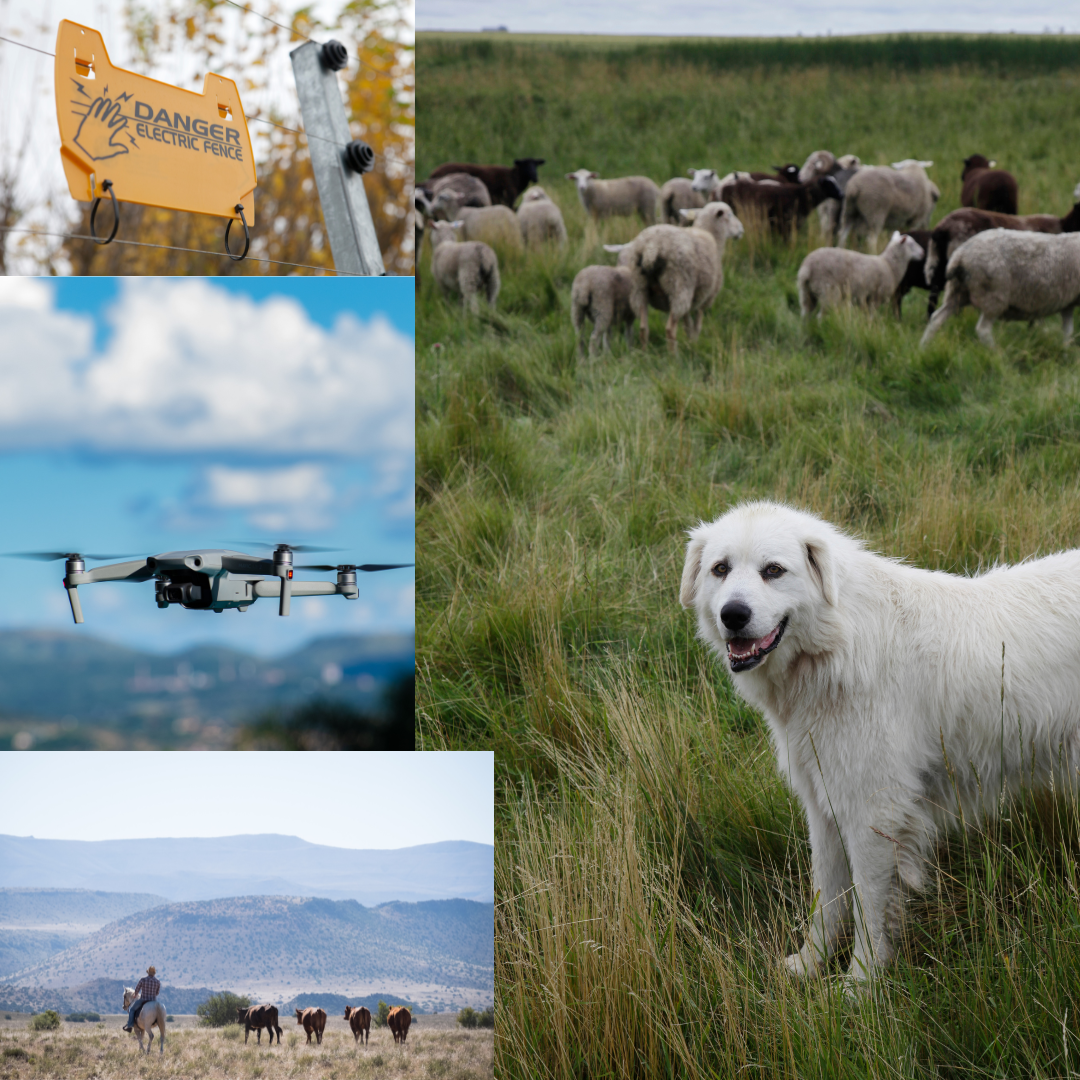
Not only are we working on this effort, but we are also in the process of funding livestock protection dogs, drones, and other non-lethal methods across the state so that wolves and people can coexist. See the article below for more on the efficacy of these tools over killing wolves. An ounce of prevention is worth a pound of cure.
NOW IS OUR BIGGEST TIME OF YEAR TO FUND OUR WORK. PLEASE CONSIDER A DONATION THROUGH OLD BILL’S FUN RUN WHERE YOUR DOLLARS WILL BE PARTIALLY MATCHED AND GO FURTHER!

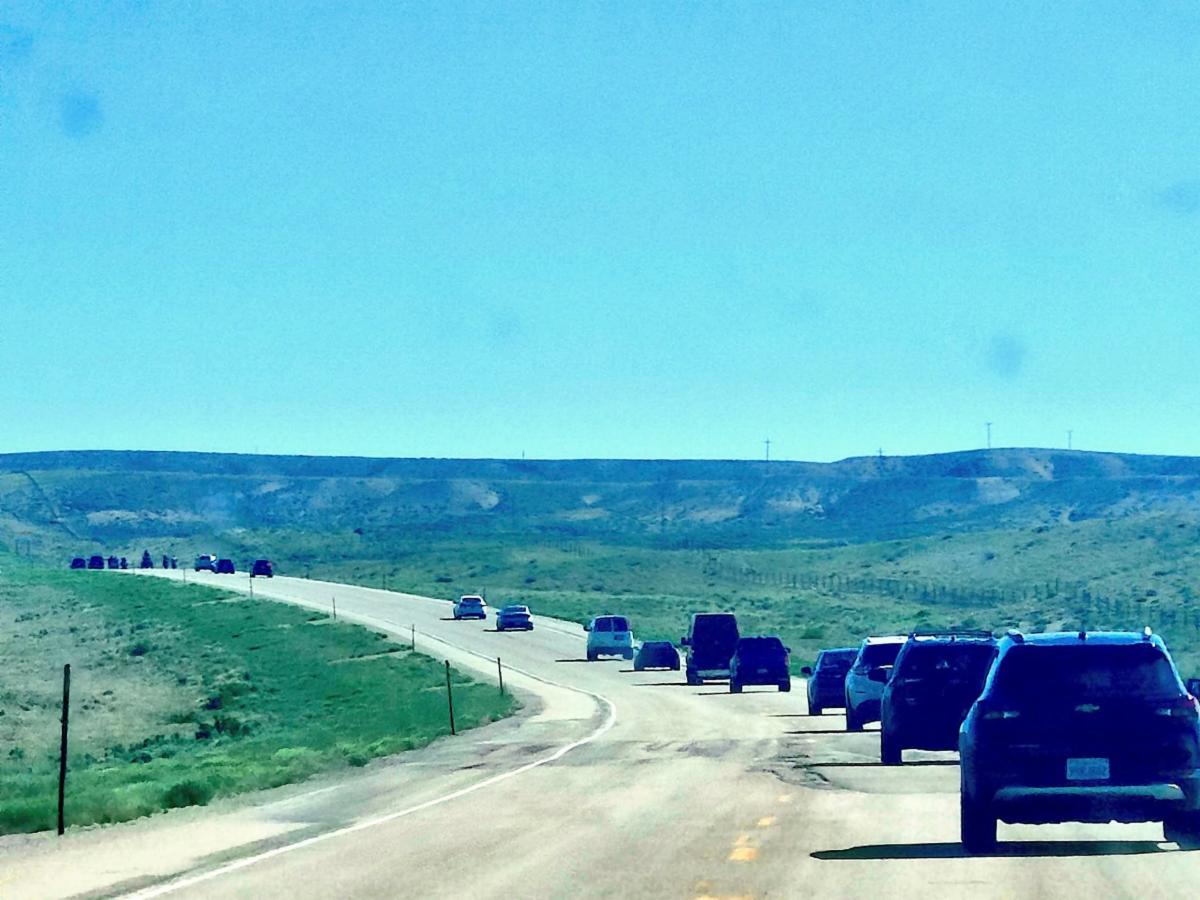
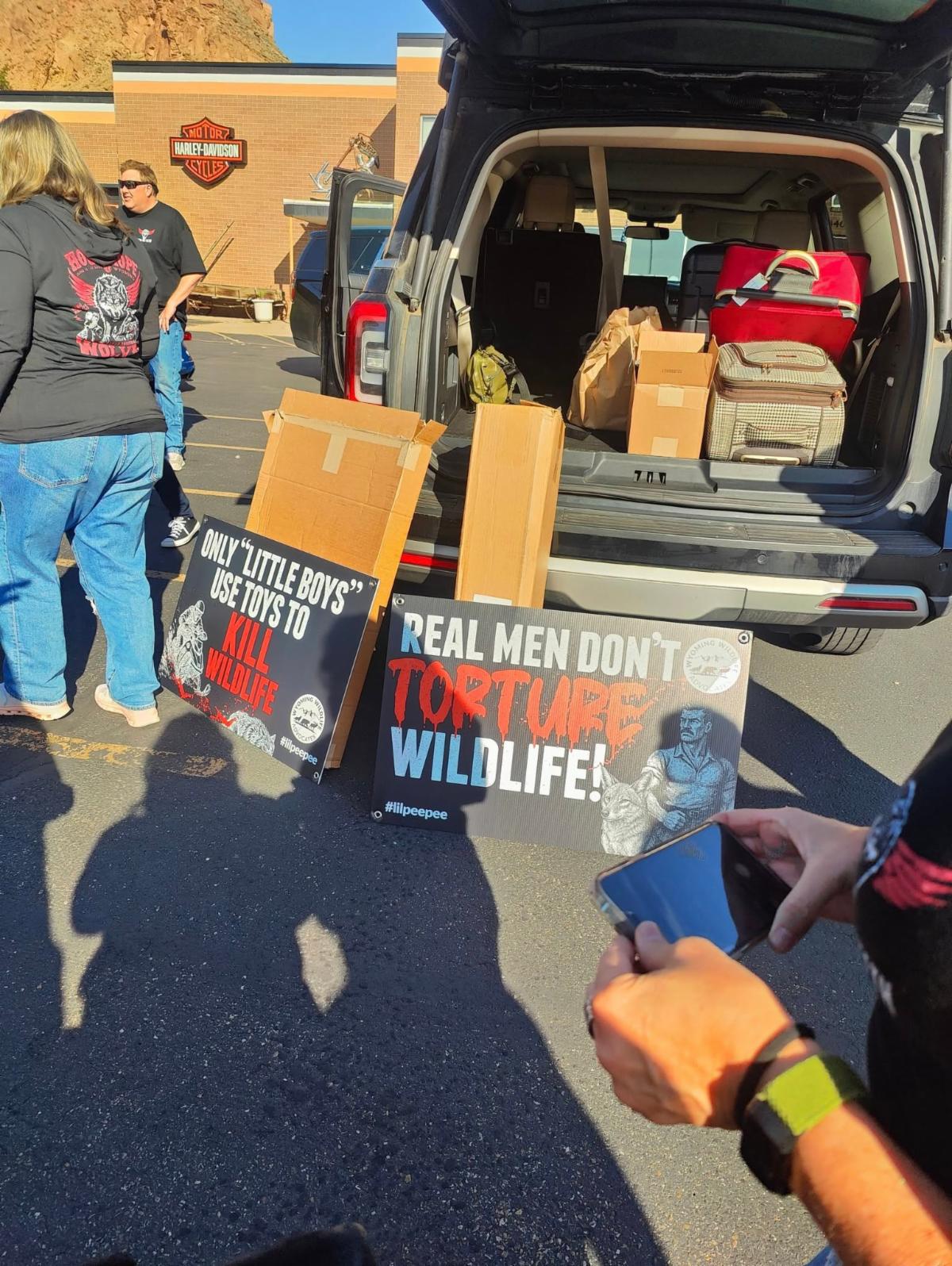
Some of the actions WWA takes to stop torture of wolves, coyotes, and other animals in Wyoming and across the West! We walk the walk, not just talk the talk. Join us by supporting our work.


BIG PLANS AHEAD FOR NON-LETHAL WORK
- There’s an entire toolbox that is seldom being used by livestock producers in Wyoming but one that can have amazing benefits for both business owners and wolves. Electric fencing, drones, range riders, and livestock guardian dogs can all protect vulnerable livestock while keeping wolves alive and away from cattle and sheep. Over the next year, we will be focusing on getting these tools into the hands of Wyoming livestock owners so that they can learn to use them and not have to resort to killing native wildlife like coyotes, wolves, and mountain lions in order to have a successful business. Let’s work smarter, not harder to prevent conflicts before they begin. Read on to learn more about recent research that shows these tools are more effective than killing animals involved in conflict with humans.
SCIENCE IS CLEAR: KILLING WOLVES DOESN’T PROTECT LIVESTOCK
- A new study led by the University of Michigan shows that hunting wolves may reduce livestock losses, but only by a very small amount. On average, each wolf killed by a hunter was tied to just a 2% drop in livestock predation, a change so small it translated to less than one animal protected per wolf hunted.
- Researchers found that while hunting has been promoted as a tool to protect livestock, it does not consistently or significantly reduce losses. It also did not reduce the number of expensive “lethal removal” operations carried out by government agencies when specific wolves repeatedly prey on livestock.
- The study highlights that wolf-livestock conflicts are complex, and there is no simple solution. Non-lethal methods such as fencing, guardian dogs, and range riders continue to show promise, though they require ongoing support and investment.
- This research is an important reminder that decisions about wolf management should be based on evidence, not assumptions.
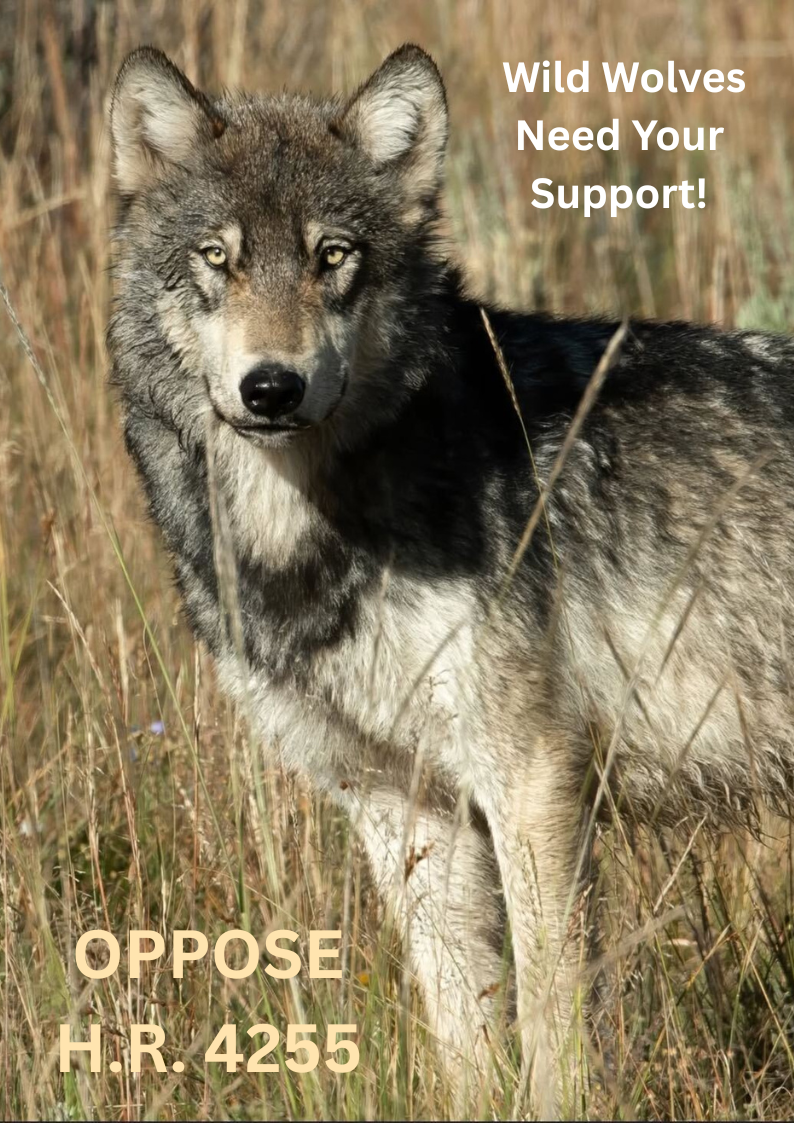
ACT NOW TO PROTECT MEXICAN GRAY WOLVES FROM THE “ENHANCING SAFETY FOR ANIMALS” ACT H.R. 4255
- Stand with Mexican Gray Wolves: Oppose H.R. 4255
- Right now, Congress is considering a dangerous bill, H.R. 4255, the so-called “Enhancing Safety for Animals Act of 2025”, that would strip Endangered Species Act protections from the Mexican gray wolf, one of the most endangered mammals in North America.
- This subspecies of the gray wolf, also known as the lobo, was driven to the brink of extinction by poisoning, trapping, and government-sponsored extermination campaigns in the early 20th century. Thanks only to the Endangered Species Act, the descendants of just seven wolves were bred in captivity and reintroduced to the wild in 1998. Today, there are roughly 286 wolves in Arizona and New Mexico, a fragile but hopeful beginning to one of our nation’s greatest wildlife recovery stories.
- But recovery is far from secure. Mexican gray wolves have lost over half of their original genetic diversity, making them especially vulnerable to low pup survival rates and health issues. Poaching and vehicle collisions remain the leading causes of death. Programs that help ranchers coexist with wolves, such as range riders, carcass removal, and livestock guardian dogs, are only just gaining momentum.
- If H.R. 4255 passes, protections will disappear, mortality will rise, and decades of progress could be undone. Prematurely removing safeguards would end captive wolf releases, weaken coexistence programs, and risk sending lobos back toward extinction.
- Mexican wolves are valuable as links to connecting Western wolves and reestablishing wolf populations to ecosystem that are lacking their benefits. Wyoming wolves linking up with Mexican wolves through Colorado will help restore wolves to the landscape across the West and increase genetic diversity.
- What you can do: Contact your representatives in Congress to oppose H.R. 4255 and protect the future of the Mexican gray wolf. You can do this from anywhere in the U.S.!
- Together, we can make sure the lobo remains part of our wild landscapes, not just a story in history books.
Photo Credits:
Gray Wolves Kissing: Amy Fain Gerber Cub Creek Photography
Hogs for Hope: Shannon Elizabeth & WWA
News Headlines: WyoFile
Coexistence Tools: Stock Photos
Gray Wolf: Adam Skalzub
Gray Wolf Mexican Wolf: Allie Swafford
Gray Wolf in Winter: Amy Fain Gerber Cub Creek Photography