FINAL CHANCE FOR COMMENTS TO FOREST SERVICE ON LONG-TERM PERMITTING OF FEEDGROUNDS
Public Comment Opportunity ends January 16th!
Because of a lawsuit filed by WWA and our partners at the Gallatin Wildlife Association, Western Watersheds Project, and the Sierra Club Wyoming Chapter, a court found that the U.S. Forest Service (USFS) was in violation for not having a proper permit from The Wyoming Game and Fish Department in order to use the Forest Park and Dell Creek Elk Feedgrounds. Last year, the WGF Commission applied for a new permit to the Bridger-Teton National Forest. That permit would allow operations at both feedgrounds in western Wyoming to continue for another 20 years.
In late 2023, the USFS released a Draft Environmental Impact Statement outlining potential alternatives to continued feeding; including the potential phase out of the feedgrounds. We are pleased to see science based management alternatives being considered including alternatives that would provide for no feeding and a phase out of feeding. Please take a moment to submit a public comment to the USFS in support of ending feeding on USFS lands. It is past time to send this archaic practice to the past and look forward to natural, science-based ecosystems and healthy elk herds in the future.
The Details:
The USFS is proposing to continue to allow the feeding on both Forest Park and Dell Creek Feedgrounds for up to 20 years. However, there are alternatives also proposed that need to be advocated for. The No Special Use Authorization (No Feeding Alternative) and the Phase Out Feeding Alternative are both better options than allowing feeding to continue for another 20 years. There is one additional alternative that would allow for emergency feeding only but the criteria for emergency feeding is too lenient and would likely lead to feeding in most years – therefore being the same as the proposed action of continued feeding.
Recent research conducted by the U.S. Geological Survey and modeling by the Forest Service shows that CWD prevalence rates and socioeconomic impacts will be worst with continued feeding. They will be minimized by immediately stopping feeding or phasing out feeding. Continuing to feed will have significant impacts on elk herd populations and individual animals as CWD and other diseases continue to increase. Previous research predicted population declines after CWD prevalence reaches 7%. Continuing to feed elk will likely result in CWD reaching 20-30% prevalence rates. CWD experts and wildlife veterinarians all say that once prevalence rates climb into higher percentages, it becomes very difficult to contain the disease. Partly because then the environment becomes contaminated and a vector for disease spread therefore continuing to infect animals well into the future.
A quote from former WGFD State Veterinarian Hank Edwards: “It’s worrisome, because as more and more prions get deposited, our ability to control this disease is going to become really constrained. Because then it’s the environment driving the show, not animal to animal. So that is my biggest worry, is as we let this continue on, it’s going to get to the point that it could be impossible.”
Read the Full Research Report Here
Please tell the Forest Service you DO NOT support the Proposed Action, but DO SUPPORT either the No Special Use Authorization Alternative or Phase Out Feeding Alternative. The answer to this question is one we want to hear from the Forest Service:
How can the Forest Service, in good faith, select the option that will provide the worst disease prevalence rates and biggest socioeconomic impacts to the public?
SUBMIT A COMMENT BY CLICKING HERE
SOME CWD AND FEEDGROUND FACTS
As you craft your comment, remember these important facts about CWD and other factors that are involved in elk feedgrounds. Don’t believe the myths and misinformation that is circulated by those who benefit financially from the continuation of feeding elk.
- CWD is 100% fatal.
- There is currently no cure and no vaccine for CWD – nor is there likely to be in the near future as this disease is caused by a misfolded protein called a prion.
- No other state in the nation feeds elk at feedgrounds on an annual basis
- Colorado has a population of elk that is nearly three times larger than Wyoming’s and doesn’t have feedgrounds.
- Elk have reestablished historic migration routes in other states where they were eradicated in years past – they can do so in Wyoming too.
- The Forest Service has a mandate to “[p]rovide suitable and adequate habitat to support the game and fish populations established by the Wyoming Game and Fish Department, as agreed to by the Forest Service.” How does the Forest Service expect to provide habitat when feedgrounds are likely to become hotspots for prions?
- Knowingly choosing the option that will provide the worst outcomes for elk and Wyoming communities is not being a public steward of resources held in the public trust.
- The two feedgrounds in question, Forest Park and Dell Creek, have only been in operation for about 40 years – not 100 years as proponents of feeding would have you believe.
- Feedgrounds are not necessary to support elk populations and elk will not starve in mass numbers if feedgrounds are closed – there is ample winter range to support plenty of elk in Northwestern Wyoming.
- In light of the information shown by the modeling and learned from the eight CWD experts interviewed, the feedgrounds should be looked at on a holistic level. From the report, “CWD prevalence was highest when considering the continuation of feeding (PA) at all feedgrounds within the five herd units. The lowest CWD prevalence rate was achieved when feeding was stopped (NF) at all feedgrounds within the five herd units (p. 185).” The science is clear: the best option for elk populations is to apply the no feeding management alternative to all five herd units to see lower CWD prevalence over a 20-year period.
- CWD is not the only disease that is detrimental to elk on feedgrounds. They are also susceptible to other diseases like hoof-rot that in the winter of 2022-2023 killed nearly 50% of all elk calves at the Horse Creek feedground. This disease is nearly non-existent in free-ranging elk herds.
- There are already mitigation measures available to landowners to reduce conflicts with elk and more can be implemented with money saved from not feeding elk.
- Wolves and mountain lions can be helpful for mitigating the spread of CWD and other diseases.
- Predator killing contests are held statewide from November through March which target valuable scavengers like red fox, wolves, skunks, and coyotes. Forest Park feedground is outside of the gray wolf trophy hunting area therefore allowing wolves to be killed year-round without bag limits or restrictions. Both Dell Creek and Forest Park feedgrounds are surrounded by areas where scavengers can be killed year-round. This prevents large carnivores and scavengers from being able to properly serve their role in the ecosystem as key components in limiting the spread and prevalence of CWD and other diseases by being cleansers of the environment.
- Other states have successfully phased out feeding of elk.
- The biggest benefit of continuing feeding is to livestock and hay producers. The greatest benefit of discontinuing feeding is to hunters, wildlife-watchers, the ecosystem, the economy, and the elk themselves.
Healthy Elk Management in the Intermountain West:
Alternatives to Feedgrounds Here
Photo Credits:
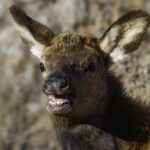
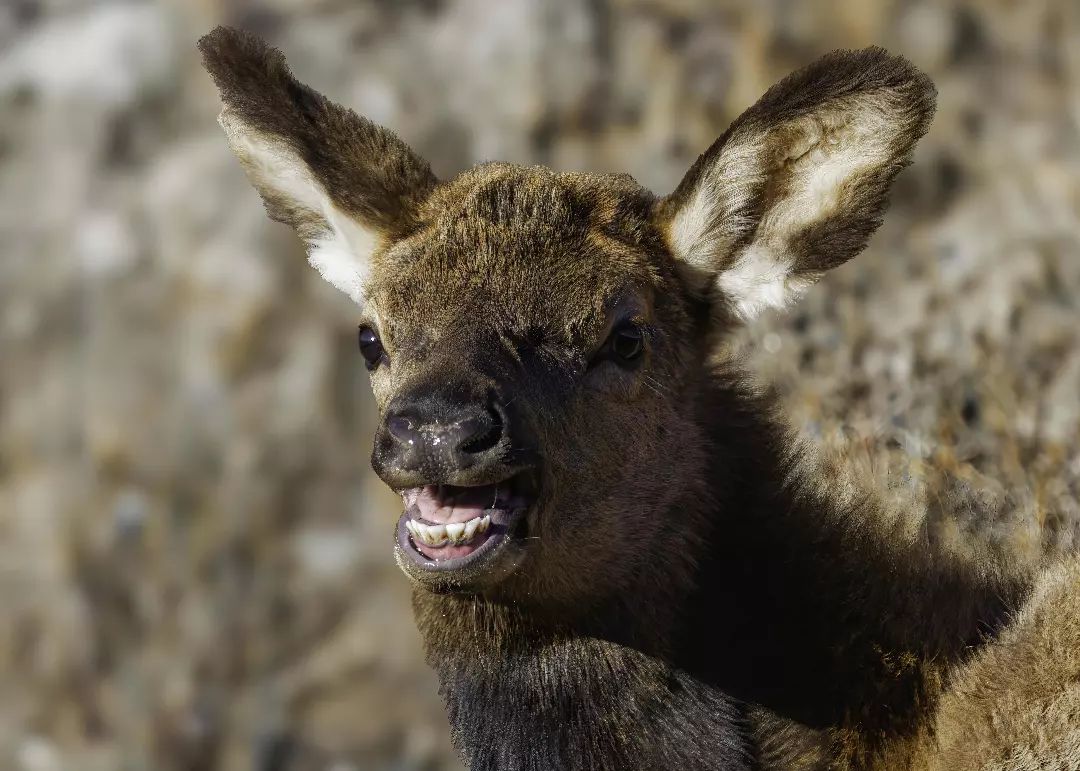
Cow Elk: Vo von Sehlen Votography
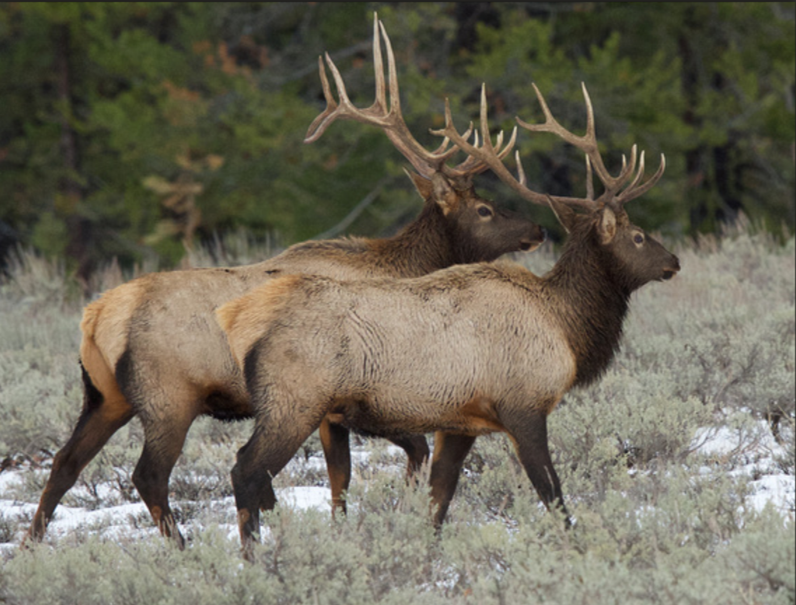
Two Bull Elk: Kent Nelson
Red Fox: Kris(tin) Halsey